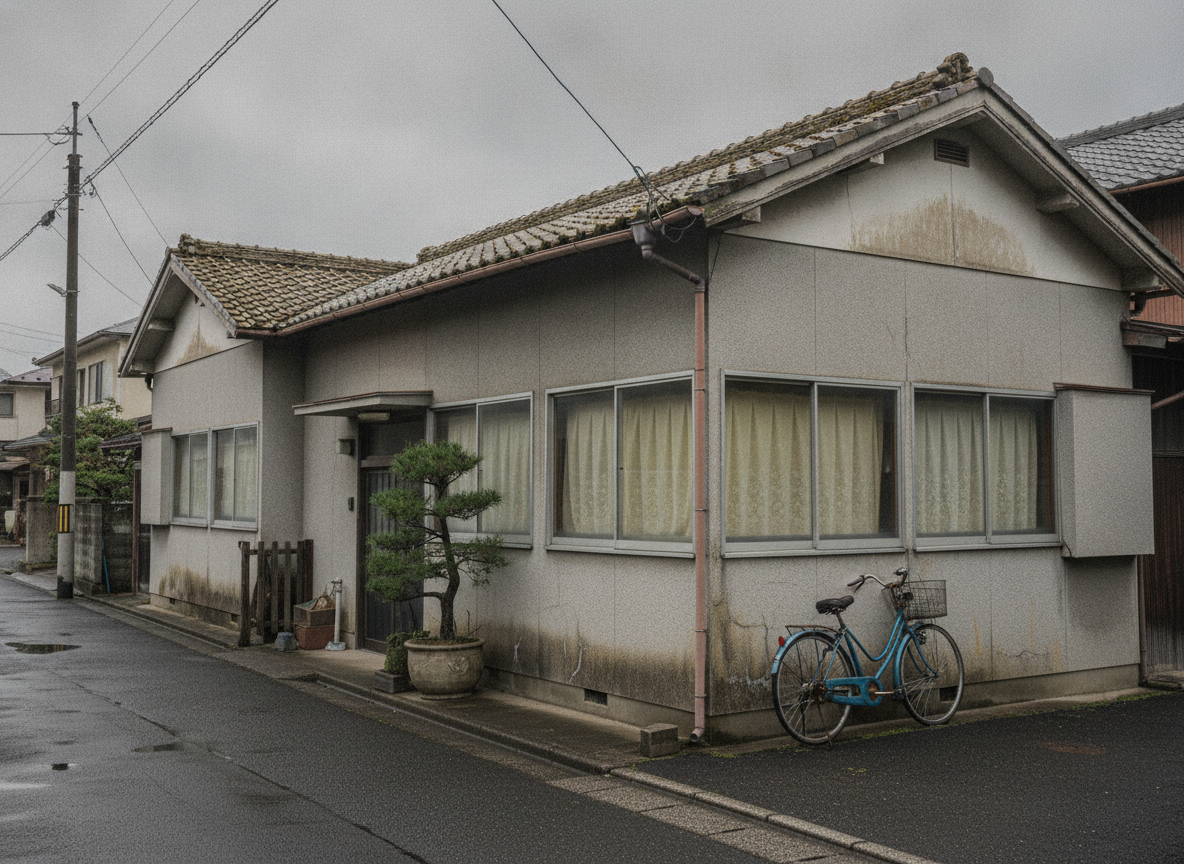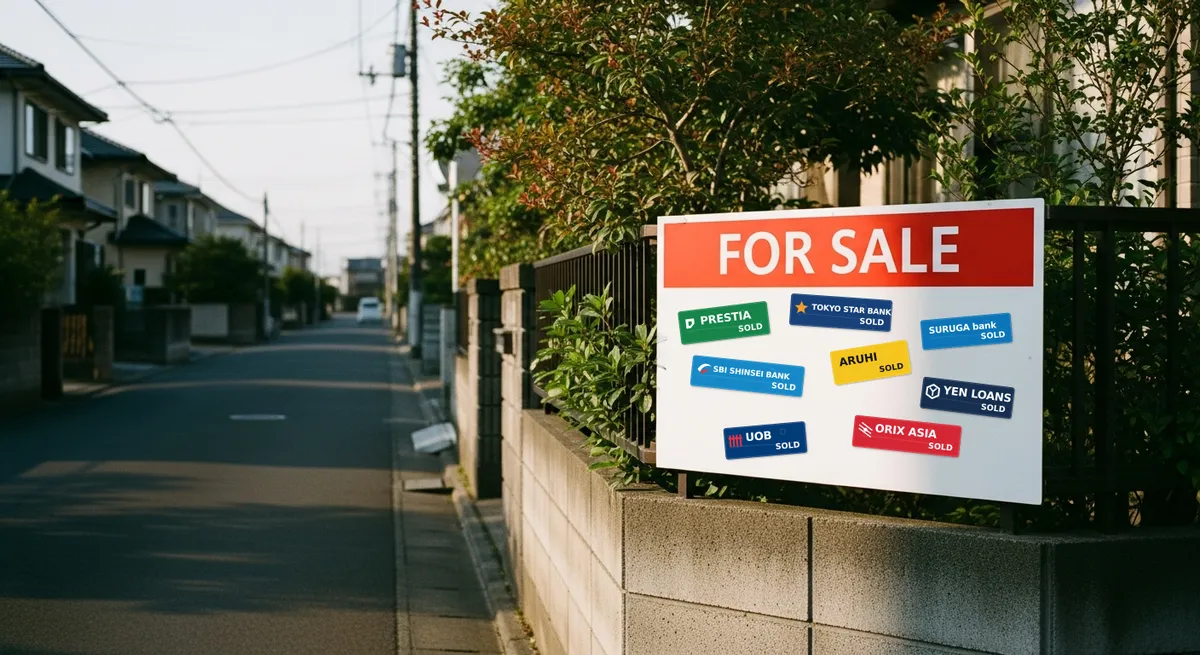
The sentence that appears most often in Japan property guides -- "financing is difficult for foreigners" -- is technically true and practically unhelpful. It describes a category, not a decision. What buyers actually need is a list of the specific institutions that lend to foreign nationals, what they require, and where to find them. That is what this guide provides.
The market has shifted since 2023. A specialist non-resident lender launched, regional banks quietly expanded their foreign-resident products, and Singapore-based banks formalised Japan mortgage offerings for overseas buyers. The options are real. They require research and paperwork, but they exist.
The Residency Divide
Residency status is the single most important variable in Japan mortgage lending. It determines which lenders will consider your application, what loan-to-value ratio you can expect, and what interest rate you will pay. The market splits cleanly into two tracks.
Residents -- foreign nationals living in Japan with a valid residency card (在留カード, zairyu card) and Japanese-sourced income -- can access most of the mainstream lending market. Several major banks have built specific products for foreign residents, including those without permanent residence status.
Non-residents -- buyers based outside Japan, purchasing for investment or future relocation -- face a narrower market. Until recently, the standard advice was "Japanese banks won't lend to you." That is no longer the complete picture, but the options are fewer and typically carry lower LTV ratios and higher rates.
For Residents in Japan
SMBC Trust Bank Prestia

SMBC Trust Bank Prestia is the banking arm that absorbed Citibank Japan's retail operations, and it has retained that institution's long history of serving international clients. It is one of the few major Japanese banks that explicitly does not require permanent residency -- foreign nationals on work visas and other long-term residence permits can apply.
Key parameters: minimum annual income of ¥5 million; loan amounts from ¥10 million to ¥500 million; repayment to age 80. Prestia offers English-language mortgage support and documentation, which reduces friction considerably for applicants not fluent in Japanese. No guarantor is required.
Interest rates depend on the plan chosen (floating or fixed) and the borrower's profile, but Prestia's rates are competitive with domestic Japanese lenders. Prestia discounts its base variable rate by up to 1.00 percentage point for well-qualified, higher-balance customers, so the applied rate lands near the low end of the domestic market. Rates across the board moved up once the Bank of Japan began normalizing policy in 2024, ending the near-zero rates of the negative-interest-rate era.
Tokyo Star Bank -- Star Mortgage (For Non-Permanent Residents)

Tokyo Star Bank's Star Mortgage is marketed specifically at foreign nationals without permanent residence. It is one of the cleaner products on the market for this segment: no guarantee fee, no early repayment penalties (partial or full).
Loan parameters: ¥5 million to ¥100 million; repayment periods of 1 to 35 years. Eligibility requires qualifying Japan employment and annual income of ¥4 million, or ¥3 million for regular employees aged 40 or younger. A notable feature: if you nominate your Tokyo Star Bank account as your salary deposit account, the interest rate reduces by 1.10 percentage points for the life of the loan. If you obtain permanent residency during the loan term, you may qualify for a further preferential rate adjustment on application.
Tokyo Star Bank also maintains an English-language site section covering all its foreign customer products, which makes navigating the options easier than at most domestic institutions.
Suruga Bank

Suruga Bank operates with more flexibility than most mainstream lenders. It prefers applicants with permanent residency but does not reject non-PR applications outright -- its underwriting considers the applicant's employment stability, length of residence in Japan, and intention to remain. For applicants who can demonstrate both, Suruga will engage.
Important caveat: Suruga requires that applicants have sufficient Japanese-language competence to understand the loan product and contract terms. This is an unusual and enforceable condition -- if the bank judges that an applicant cannot comprehend what they are signing, the application will be declined. Loan terms run from 1 to 40 years on houses, stretching to 50 years on condominium products, and the standard housing loan runs up to ¥600 million. No personal guarantor is required under the standard housing loan product.
SBI Shinsei Bank

SBI Shinsei Bank has a reputation among Japan's real estate community for processing foreign national mortgage applications with less friction than the mega-banks. Rates are competitive and the application process is considered manageable for applicants working with an experienced real estate agent. SBI Shinsei does not publish foreign-specific product pages in English, so most applicants approach them through bilingual agents or loan consultants.
A Note on ARUHI and the Flat 35

SBI ARUHI says it has been the top provider of the Flat 35 loan by execution volume for sixteen years running, through the year to March 2026. The Flat 35 is a government-backed, fully fixed-rate loan administered by the Japan Housing Finance Agency (JHF) -- terms run to 35 years and rates have historically been competitive given the government-backed structure.
The practical limitation for most foreign buyers: the Flat 35 is in practice restricted to Japanese citizens and special or general permanent residents. Foreign nationals on long-term visas generally do not qualify. If you acquire permanent residency, the Flat 35 through ARUHI or another of JHF's 300+ partner institutions becomes worth investigating.

For Buyers Based Outside Japan
Non-resident buyers -- those with no Japanese address or income source -- face a more limited set of options. Japanese domestic banks almost universally require Japan residency and income. There are three routes worth knowing about.
Yen Loans

Yen Loans (Money Lending Business Operators License: Governor of Tokyo (1) 31998) is a licensed Tokyo-based lender that launched specifically to fill the non-resident gap. It accepts borrowers without a Japanese visa, Japanese income, a Japanese bank account, or a local corporate structure -- the exact circumstances that exclude most non-residents from conventional Japanese lending.
The product covers new purchases, refinancing, and equity release. Yen Loans lends primarily to individuals but can consider small property-holding corporate structures (KK). Conditional approval with indicative loan terms usually follows within a couple of weeks of receiving the required documents. The team works in English, Chinese, and Japanese.
Loan-to-value ratios for non-residents are lower than for residents, and terms are negotiated individually. Rates reflect the additional risk profile of a borrower with no Japan-based income stream -- expect a meaningful premium over domestic resident lending.
Tokyo Star Bank -- Real Estate Investment Loan for Non-Residents
Tokyo Star Bank extends its foreign customer focus to non-residents with a separate Real Estate Investment Loan for Non-Residents of Japan. This product is designed for overseas buyers purchasing Japanese property as an investment. Qualification criteria and loan terms are assessed individually; contact the bank directly for current parameters.
Singapore and Hong Kong Banks
For buyers based in Singapore or Hong Kong, home-market banks may be the most practical route. Several regional institutions have formalised Japan property lending for overseas buyers:
 UOB Singapore -- International Property Loans cover Japan with up to 70% financing, for investment (buy-to-let) use only. The loan is arranged through UOB in Singapore and needs a UOB Singapore account, so it fits overseas buyers rather than Japan residents. Borrowers can finance in Singapore dollars or a foreign currency; minimum loan sizes apply.
 ORIX Asia Limited (Hong Kong) -- Dedicated Japan property mortgage product. The assessment process runs 6-8 weeks from receipt of full documentation, covering credit assessment, document review, and on-site due diligence.
Loan-to-Value and Rate Reality Check
| Borrower Profile | Typical LTV | Indicative Rate Range | Key Lenders |
|---|---|---|---|
| Japan resident, permanent residency | Up to 90-100% | 0.8%-2.0% | Most banks incl. Flat 35 via ARUHI |
| Japan resident, long-term visa (no PR) | Up to 80-90% | 1.0%-2.5% | Prestia, Tokyo Star, Suruga, SBI Shinsei |
| Non-resident, overseas-based buyer | 50-70% | 2.0%-4.0%+ | Yen Loans, Tokyo Star, UOB, ORIX Asia |
These are indicative ranges. Individual credit profiles, property type, location, and lender criteria at the time of application will all influence the outcome. The rate differential between the non-resident and resident tracks is material -- for a ¥30 million loan, the monthly repayment difference between 3.5% and 0.8% over 25 years runs to roughly ¥50,000-¥60,000 per month.
What Lenders Actually Assess
Across all the institutions above, underwriting evaluates similar factors, weighted differently by lender:
- Income level and stability -- most resident-track lenders want ¥3M-¥5M minimum annual income, with the previous 1-2 years assessed.
- Employment type -- salaried employment with a recognised employer carries more weight than self-employment or freelance income.
- Length of Japan residence -- for applicants without PR, longer continuous residence in Japan is viewed more favourably.
- Visa remaining term -- applications close to a visa renewal date are harder to place.
- Property type and location -- urban properties in Tokyo, Osaka, Nagoya, and Fukuoka attract better terms. Older buildings (pre-1981, prior to Japan's updated seismic standards) may require additional surveys or be declined outright.
- Debt-to-income ratio -- existing credit card balances, car loans, or other mortgages are factored in.
The New Filing Every Non-Resident Buyer Owes (April 2026)
Here is the rule most 2025 guides have not caught up with. Until this year, a non-resident who bought a home to live in was exempt from Japan's foreign-exchange reporting on the purchase. From 1 April 2026 that carve-out no longer covers buying the property itself. Acquire ownership of Japanese real estate as a non-resident and you now file a Foreign Exchange and Foreign Trade Act report, Form 22, with the Ministry of Finance through the Bank of Japan, within 20 days of the acquisition, whether you bought it to live in or as an investment, and no matter how the deal was financed. (A narrow exemption still applies to residential leasehold rights rather than ownership; second homes and villas were never covered.) The form records property type, location, area, acquisition date, price, and, on the version in use since April, the purpose of the purchase. An agent or the judicial scrivener handling your registration will usually file it for you, but get that confirmed in writing. Miss the 20-day window and you are exposed to a fine of up to ¥500,000.
Working With a Specialist
Navigating foreign buyer lending in Japan is significantly easier with a bilingual intermediary who knows which banks are currently approving applications from buyers in your circumstances. Bank policies shift -- a lender open to non-PR applicants one quarter may tighten criteria the next. Experienced agents and mortgage consultants carry current intelligence on where applications are actually being approved.
Akiya Japan works with Akiya Japan Buyer Support, a licensed Japanese brokerage, for exactly this kind of introduction. A Akiya Japan Buyer Support consultation puts a bilingual broker between you and the banks, someone who already tracks which lenders are approving buyers in your situation this quarter. A few other English-language agencies offer comparable buyer support:
- Plaza Homes -- Tokyo-based agency with a dedicated mortgage support service for foreign buyers. Covers resident and non-resident lending introductions.
A well-connected agent can approach multiple banks simultaneously, which is more efficient than applying sequentially and relying on individual rejections to diagnose what each lender requires.
Where to Start
For buyers living in Japan on a long-term visa, the clearest starting points are SMBC Trust Bank Prestia (English support, no PR required, established track record with foreign nationals) and Tokyo Star Bank's Star Mortgage (purpose-built for non-permanent residents, no guarantee fee, no early repayment fee). Add Suruga Bank and SBI Shinsei if those two initial conversations do not produce terms you can work with.
For buyers outside Japan, Yen Loans is the most accessible domestic Japanese option for non-residents. Tokyo Star Bank's non-resident investment loan is the alternative from a regulated Japanese institution. Singapore and Hong Kong-based buyers should also investigate UOB and ORIX Asia -- the familiarity of a home-market bank relationship may offset the less favourable LTV compared to what a resident-track borrower would access.
No lender in Japan will finance 100% of a purchase for a foreign buyer without permanent residency. Plan for a minimum 20-30% down payment on the resident track, and 30-50% on the non-resident track. Treat any financing as a tool to optimise capital deployment rather than a substitute for equity. And budget past the purchase itself: the annual property-tax bill lands whether or not you borrowed to buy.