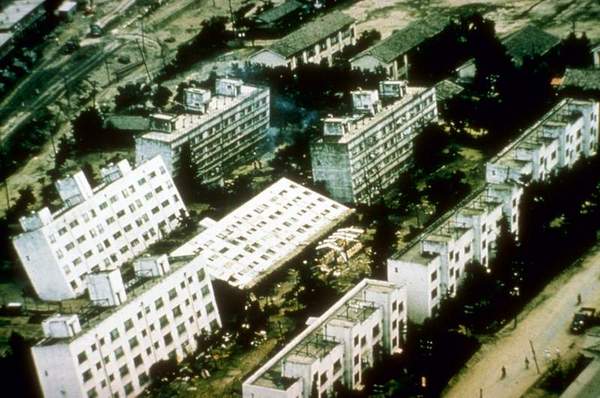
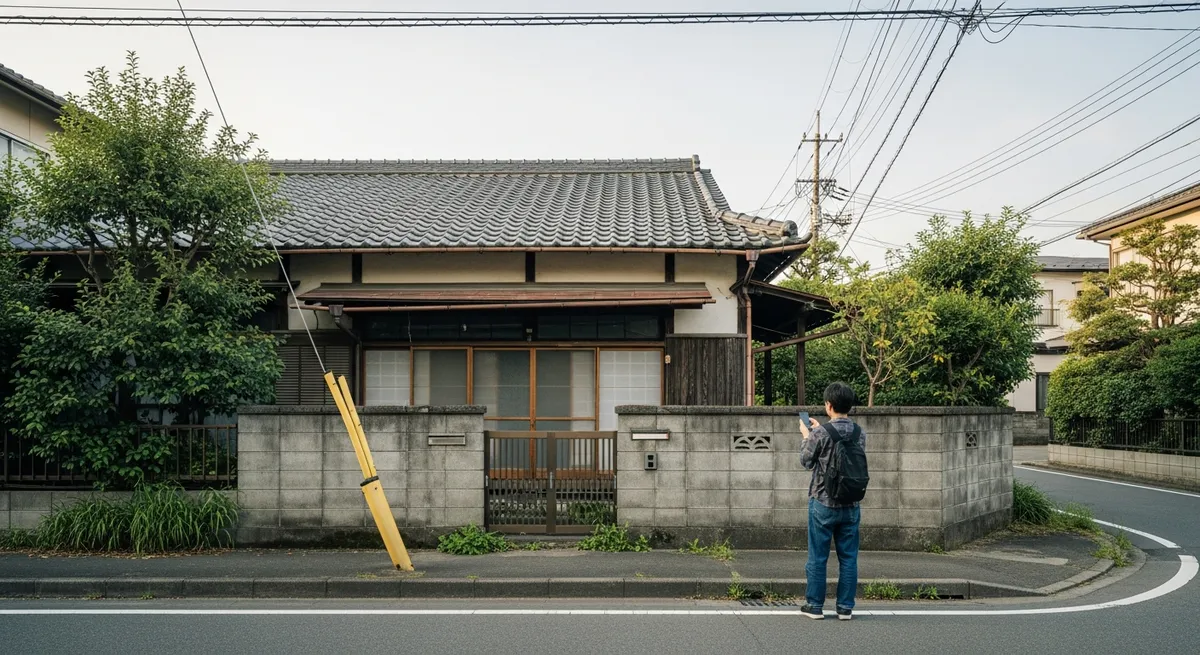
Search "what is an akiya bank" and you'll find dozens of sites that assume you already know. An akiya bank (空き家バンク, akiya banku) is a listing registry a Japanese municipal government runs for vacant homes in its area. It isn't a bank in any financial sense. Nobody lends you money there, and nobody holds your savings. Think of it as a matchmaking service that a town hall runs between owners who can't sell an empty house through normal channels and buyers who want one.
As of the end of October 2026, 1,155 municipalities across Japan participate in the national aggregator system that groups local akiya banks together, according to the Ministry of Land, Infrastructure, Transport and Tourism's own figures. Only 750 of those have a property listed at any given moment. That's out of roughly 1,700 municipalities nationwide. Most towns have joined some version of the system. Not all of them, and the ones that have run it very differently from each other.
How an Akiya Bank Works
The mechanics are the same almost everywhere, even when the website looks nothing alike from one town to the next.
- An owner registers. Someone who has inherited a house, or owns one they no longer live in, submits it to the local government office, usually free of charge. Most towns ask for basic details, including address, size, age, and rough condition.
- The municipality lists it. The town publishes the listing on its own site, on a national aggregator, or both. Some akiya banks are well built, with photos, floor plans, and a searchable map. Others are a PDF table that gets updated every few months and nothing else.
- A buyer applies, and the town makes the introduction. The municipality itself is not the seller. It connects an interested buyer to the owner directly, or to a local real estate agent who handles the actual contract and closing.
That third step is where most of the surprises live, and we'll get to them. First, the bigger problem buyers run into before they've even found a listing.

Why There Is No Single Akiya Bank to Search
There's no national website where you type in a budget and a prefecture and see every vacant house in Japan. There are, instead, two MLIT-recognized aggregators that pull listings in from individual towns, plus hundreds of municipal sites that never feed into either one.
On its own, athome's akiya bank portal currently lists around 11,650 properties from roughly 916 participating municipalities. The other operator, LIFULL HOME'S, runs the matching portal for the rest. MLIT's own combined count, published monthly, puts the two portals together at close to 20,000 properties, and that figure already includes any property listed on both, so it is not quite 20,000 separate houses. Neither portal is close to complete. The smaller, more rural towns with the worst vacancy problems are often the ones that never got around to syncing their listings anywhere beyond their own city office page.
Practically, a serious search means checking both national aggregators, then checking the municipal site of any specific town you care about, since its best inventory may never show up on the bigger platforms at all.
Where the System Came From
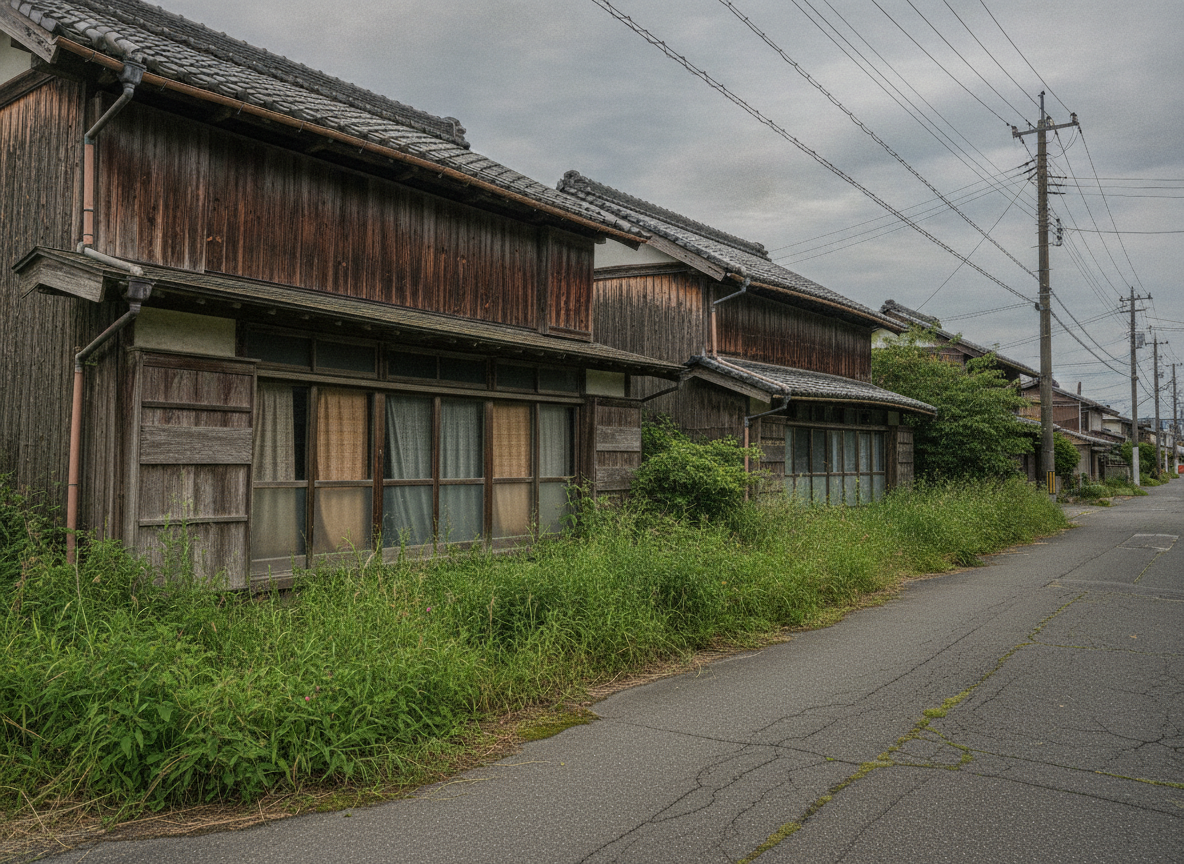
Akiya banks existed informally before the law caught up with them. A few rural towns started their own registries in the 2000s as depopulation accelerated and houses sat empty faster than anyone could sell them. The practice became a national framework in 2014, when the Diet passed the Act on Special Measures Concerning the Promotion of Vacant House Countermeasures (空家等対策の推進に関する特別措置法, akiya-tō taisaku no suishin ni kansuru tokubetsu sochi hō), which took effect in February 2015. The law gave municipalities the legal footing to survey vacant houses, build databases of them, and in the worst cases order repairs or demolition on hazardous "specified vacant houses" at the owner's expense.
The two national aggregators came later. MLIT ran a tender to select operators for a unified portal, and the system has been in full operation since April 2018, run by LIFULL and athome under government coordination. That's the two-tier structure buyers deal with today. A national law pushed every municipality to start tracking its vacant houses, and a patchwork of local implementations, ranging from excellent to barely functional, got loosely stitched together by two private-sector aggregators.
What a Listing Usually Looks Like
Prices on akiya bank listings skew low, often into the low millions of yen, occasionally lower, and some towns list houses for a token ¥1 on condition the buyer commits to the renovation and residency terms attached to it. But cheap doesn't mean move-in ready. Most akiya bank houses have sat empty for years, sometimes decades. Expect an old roof, little or no insulation, a kitchen and bathroom that need full replacement, and in plenty of cases structural work the listing never mentions because nobody inspected it that closely before posting it.
Photos are hit or miss. A well-run akiya bank in a tourist-friendly prefecture might have a dozen clear interior shots and a floor plan. A smaller town's listing might have one photo of the front door taken on someone's phone. Either way, assume the listing undersells the work required rather than oversells it. Nobody at the town office wants to make the house look worse than it is, but nobody is doing a professional inspection for you either.
Applying for a House, Step by Step
The exact paperwork differs by municipality, but the sequence is close to universal, and it is slower than buyers coming from a private-market background tend to expect.
- Register as a user (riyō tōroku, 利用登録) with the municipality. A short form covering who you are and what kind of property you're looking for.
- Browse the listings and request a viewing through the town office, not by contacting the owner directly. Expect to wait two to four weeks for a reply, longer if the owner lives far from the property or is elderly.
- Inspect the property in person, usually with a town official present. This is often the first point where the real condition of the house becomes clear.
- Submit a formal application if you want to proceed. The town forwards it to the owner on your behalf.
- Wait through matching and negotiation. This step alone can run one to three months if the owner has multiple heirs who all need to agree to the sale, which is common with inherited property.
- Sign the contract and close, usually with a local agent or judicial scrivener handling the paperwork once the owner has agreed.
Add it up and a realistic timeline from first inquiry to keys in hand runs two to six months for a straightforward case, and four to eight months when a renovation subsidy application is layered on top. A private-market purchase with no municipal involvement can close in weeks by comparison.

The Strings Attached to a Listing
An akiya bank listing is not a straightforward cash sale the way a private listing is. Many municipalities attach conditions, and buyers are often surprised by how deep they run, well past a renovation deadline.
- Intent to reside, not to invest. A number of towns want you to live in the house yourself rather than hold it as a rental or a vacation place. Some spell out a minimum residency period, commonly five to ten years, tied to the subsidy money.
- A renovation clock. If subsidy money is attached, you'll usually need to complete the work within two to three years, using a locally licensed contractor in some towns.
- Screening, not first-come-first-served. Applying doesn't guarantee you get the house. Some towns treat the decision as a form of community vetting as much as a property sale, weighing whether an applicant is likely to stay and contribute to a shrinking community rather than only whether they can pay. An interview with local officials is part of the process in a number of towns.
None of this is illegal or unusual by Japanese standards, and it shouldn't put off a buyer who wants to live somewhere specific. It's a reason to read the conditions on each municipality's page before you fall for a listing, because the terms vary town by town and nobody aggregates them for you.
The Subsidies That Come With It
The reason towns put up with the extra administrative work is the same reason they offer money to go with it. A house bought through the akiya bank, rather than through a private agent, often qualifies for renovation grants that a private-market purchase doesn't.
Amounts vary enormously by municipality. Typical renovation subsidies run from ¥500,000 to ¥5,000,000, usually covering 30 to 50% of eligible renovation costs up to a cap. Minamiizu, a town on the Izu Peninsula, pays an incoming buyer up to two-thirds of the renovation bill, capped at ¥800,000 (the property owner's own share tops out lower, at a third of the cost). Several towns in Nagano prefecture offer around ¥2,000,000. On top of the municipal grant, a national relocation subsidy pays ¥1,000,000 per household (¥600,000 for a single mover), plus up to ¥1,000,000 per child under 18, to people moving out of greater Tokyo into a designated regional area, akiya bank purchase or not. It is where guides get a family of four to roughly ¥3,000,000. It is also not open to everyone. The applicant needs to be a Japanese national or hold one of a short list of residence statuses, among them permanent residency, a Japanese national's spouse, a permanent resident's spouse, long-term resident, or special permanent resident. An ordinary work visa does not qualify.
These numbers move every budget cycle and differ by town, so treat any figure here as a starting point for your own check with the specific municipality, not a promise. A grant that existed last year can shrink, get fully subscribed, or come with new conditions the next.
The Language Barrier Is the Real Barrier
Almost every akiya bank operates in Japanese only. The listing, the application form, the phone call with the town office, the eventual contract, none of it comes with an English option as standard. A handful of towns with active inbound-migration programs have started offering bilingual support, but they're the exception.
Combine that with the screening and conditions above, and the process runs slower and less predictably than buying through a private listing. Applications can sit for weeks before anyone replies. A listing can get pulled from the site the week before you were going to apply, with no explanation given. None of this means the akiya bank route is a bad idea. It means going in with a translator, a local contact, or a broker who can make the calls for you is the difference between a process that works and one that stalls out after the second unanswered email.

What Changed for Foreign Buyers in 2026
Two separate rule changes landed this year, and an akiya bank purchase isn't exempt from either. Since 1 April 2026, a non-resident buying real estate in Japan, of any nationality, has to report the purchase to the Bank of Japan within about 20 days under the Foreign Exchange and Foreign Trade Act (FEFTA). Before that date, buying a home for your own or a relative's use was exempt from this filing. The 2026 change removed that exemption, so an owner-occupier now files too. Separately, since 5 October 2026, a revised Ministry of Justice ordinance requires every newly registered property owner, Japanese and foreign alike, to state their nationality with a copy of a passport or residence card at the time of registration. That nationality is held internally by the Legal Affairs Bureau. It isn't printed on the public title certificate.
Both are disclosure and reporting changes, not restrictions. Japan still has no law limiting land or building ownership by nationality or residency status. We've covered both rule changes and the myths around them in a separate guide to the legal toolkit for foreign buyers, if you want the detail without it taking over an article about akiya banks specifically.
Common Questions
Is using an akiya bank free? Registering as a user and browsing listings is free everywhere. Some towns charge a small administrative fee when you submit a formal application, usually a few thousand yen, far less than the property's price.
Can foreigners use an akiya bank? Yes. Nationality isn't a legal barrier to registering or applying. The practical barriers are the Japanese-language paperwork, the residency conditions some towns attach, and the slower communication, not a rule against foreign buyers.
Do you need to speak Japanese? Not strictly, but nearly everything in the process, from the listing itself to the interview with town officials, happens in Japanese. A translator, a Japanese-speaking contact, or a broker handling communication on your behalf makes the difference between a workable process and one that quietly stalls.
Can you rent out a house bought through an akiya bank? It depends entirely on the municipality's conditions. Towns that attach a residency requirement generally expect you to live in the house, not list it as a rental, at least for the length of that requirement. Read the specific town's terms before assuming either way.
Are akiya bank houses free? Rarely, and never in the sense of no cost at all. A handful of listings carry a token ¥1 price, but the buyer still pays registration taxes, agent fees where applicable, and the renovation costs the subsidy only partly covers.
Akiya Bank or Private Listing?
An akiya bank isn't the only way to buy a cheap, empty house in Japan, and for plenty of buyers it isn't even the best way. A private listing through a licensed agent comes without the residency conditions, the screening, or the renovation clock, usually at the cost of the subsidy money and sometimes a higher asking price. We've written a full comparison of the two paths if you're weighing which one fits your situation, and a running directory of English-friendly akiya bank portals by prefecture if you've decided the municipal route is the one you want.
Where Akiya Japan Buyer Support Fits In
If you've found a listing, through an akiya bank or anywhere else, and you don't want to navigate the Japanese paperwork, the screening conversation, or the purchase contract alone, Akiya Japan Buyer Support handles that part for you. It's our own licensed brokerage, not a referral to someone else. We make first contact with the seller's side or the town office on your behalf, arrange a viewing or a proxy inspection, review the Japanese purchase agreement and disclosure documents in English, negotiate terms, and coordinate the closing with the judicial scrivener who makes the transfer legal. You don't need a finished listing in hand before booking. A 30-minute consultation costs US$25, booked through the green Buyer Support button on any property page, or directly at /booking/buyer_support. You can see who we are at /office/buyer_support.
What to Do Next
If a specific town has caught your interest, start with its own city office website before the national aggregators. Search the town name plus "空き家バンク" in Japanese, even through a translator, since that's the version most likely to be current. Then check athome and LIFULL HOME'S for anything that didn't come up locally. Read the conditions on any listing you're serious about before you contact anyone, since the residency terms and renovation deadlines decide whether the house fits your plans, not whether you can afford it.
Sources
- 国土交通省 全国版空き家・空き地バンク総合情報ページ (MLIT's own participation and listing figures for the national aggregator, updated monthly)
- LIFULL HOME'S 空き家バンク (national akiya bank portal)
- athome 空き家バンク制度 設定自治体一覧 (athome akiya bank portal, municipality list)
- 衆議院 空家等対策の推進に関する特別措置法 (the 2014 Vacant House Special Measures Act, full text)
- Ministry of Finance, reporting requirement under FEFTA for a non-resident acquiring real property in Japan
- 法務省 不動産登記規則の一部を改正する省令 (the nationality-at-registration ordinance, in force 5 October 2026)