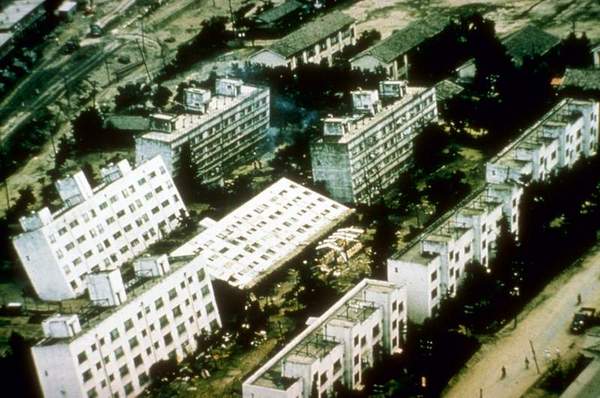
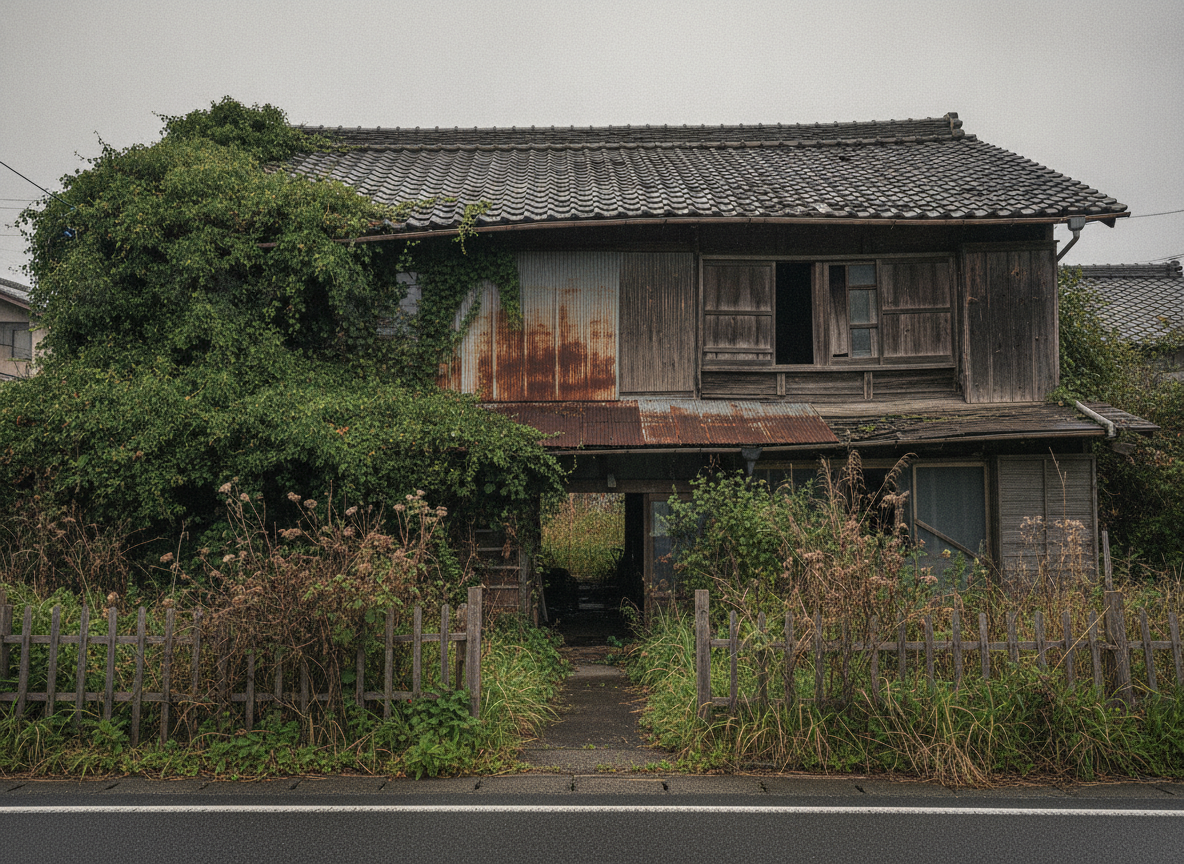
Type the question into Google and you get listicles about ¥1 houses and viral photos of houses swallowed by vines. What you don't get is the actual sequence of events. What a city does when a house sits empty, who decides, how fast it moves, and what it costs the owner who let it get there. That sequence is written into Japanese law, and it runs the same way whether the owner is a Tokyo pensioner who inherited a childhood home or a foreign buyer who let a renovation slide for a few years too long.
The law that decides, not the neighbors
Until 2015, an empty house in Japan was almost entirely the owner's business. A neighbor could complain to the ward office, but the office had no real tool beyond asking nicely. The Act on Special Measures for Vacant House Countermeasures (空家等対策の推進に関する特別措置法, akiya-tou taisaku no suishin ni kansuru tokubetsu sochihou), passed that year, gave municipalities a legal process for the first time. A 2023 amendment widened it, because by then the problem had grown past what the original law could reach.
That amendment created a new, earlier category, the "management-deficient vacant house" (管理不全空家等, kanri-fuzen akiya-tou). This sits a step below the law's original target, the "specified vacant house" (特定空家等, tokutei akiya-tou), which is reserved for a building that's dangerous or unsanitary. A management-deficient house is one that's drifting toward that state. Think a broken window left unboarded, a garden nobody has touched in two years, a roof losing tiles one storm at a time. Catching it here, before it's a genuine hazard, is the whole point of the 2023 change.
Guidance, then a recommendation, then an order
Once a municipality flags a house in either category, the process runs in stages, and each stage is a chance for the owner to fix it before the next one starts.
- Guidance. An inspector visits, documents the condition, and tells the owner what needs to happen. No penalty yet.
- Recommendation. If nothing changes, the city issues a formal recommendation. This is the step that costs money, which the next section covers.
- Order. Ignore the recommendation and the city can issue a legal order to repair or demolish, with a deadline attached.
- Administrative execution. Miss the deadline and the city can do the work itself and send the owner the bill, which can run into the millions of yen for a full demolition.
Ignoring an order on its own carries a fine of up to ¥500,000. Most houses never make it past guidance. A 2024 Ministry of Land, Infrastructure, Transport and Tourism survey of akiya owners found that nearly nine in ten vacant houses nationwide show at least some decay or damage, and more than a third have an outright structural defect, a sagging roof, a leaning wall, exposed rebar, which gives some sense of how much of Japan's vacant housing sits somewhere in this pipeline right now, whether or not a city has opened a file on it yet.
The scale of how far this has already run is bigger than most buyers expect. By March 2025, municipal action under the law had led to repair, demolition, or other remediation of 3,757 management-deficient houses and 27,244 specified vacant houses, and once you count the older local programs that predate the 2015 law, the cumulative total of resolved properties passes 220,000. Nearly 9 in 10 of Japan's 1,741 municipalities now have a vacant-house plan on file, which means the question isn't really whether your town has this process. It's whether it's been used on the house you're looking at.
What a recommendation costs you
The part that changed the incentives isn't the fine. It's the tax.
Residential land in Japan carries a fixed asset tax (固定資産税, kotei shisan zei) discount of up to five-sixths, intended to keep the tax on a family home affordable. Once a municipality issues a formal recommendation against your house, whether it's a management-deficient recommendation or the more serious specified-vacant-house version, that discount is pulled. The land portion of the tax bill can jump as much as sixfold the following year, on the same plot, with nothing else about the property having changed. This is the lever the 2023 amendment pulls. A guidance visit is a warning. A recommendation is a bill.
That single change explains a lot of the behavior shift local governments have reported since 2023: owners who'd ignored letters for a decade start clearing gutters and boarding windows the week a recommendation letter arrives, because the letter is the thing with a yen figure attached to it. (These conversions update from live exchange rates, so a reader on Australian or British currency sees the number in their own terms. JPY readers just see the yen. Switch currencies with the globe icon at the top of any article.)

When the city tears it down and sends you the invoice
Administrative execution is rare but not theoretical. Local governments across Japan have carried out several hundred forced demolitions under the 2015 law, almost always after years of unanswered letters and a documented safety risk. A leaning structure over a public footpath, a roof that's started shedding tiles onto a neighbor's car, a building condemned as a fire risk in a dense wooden neighborhood. The city hires a contractor, knocks the house down, and bills the registered owner for the full cost, which for a two-story wooden house can run well past ¥2,000,000. If the owner can't or won't pay, the bill becomes a debt the city can pursue like any other, including against the owner's other assets.
What ends up in a demolition skip is rarely just rubble. A Tokyo photographer documented a dumpster in Shibuya filled with hand-painted fusuma sliding doors, the kind of interior fitting that would have taken a craftsman days to make, torn out during exactly this kind of teardown. Nobody wanted the house. Nobody, in the end, wanted the doors either.
There's a second, separate reason owners don't want to wait for a city to intervene. Japanese civil law already holds them liable if the house hurts someone first. Article 717 of the Civil Code makes whoever controls a structure, and failing that the owner, responsible for damages caused by a defect in it, whether that's a tile falling off a roof onto a passerby or a wall collapsing onto the neighbor's fence in a typhoon. There's no requirement that the city has flagged the house for this liability to apply. An empty house two streets over from yours, half-collapsed and uninspected, is still legally your neighbor's problem to answer for if it falls on your car.

Most houses end up in an akiya bank, not a wrecking crew
Demolition is the outcome everyone talks about. It's also the least common one. Most municipalities would rather hand the house to someone who'll live in it than pay to knock it down, and that's what the akiya bank (空き家バンク, akiya banku) system is for. Roughly 1,155 municipalities across Japan now run one, a public listing where an owner registers a vacant house, the town vets and lists it, and anyone interested applies directly through the local office, though only about 750 of those towns have a house listed at any given moment. The national portal's own combined count runs close to 20,000 listings, though that tally counts some houses twice across its two platform operators. We've put together the full list of banks by prefecture if you want to browse by region.
Some towns go further and list houses at ¥0. Okutama, a mountain town within Tokyo's own prefecture, has run a zero-yen akiya bank since 2020 for houses that don't fit its separate resettlement program. The purchase price being zero doesn't mean the house is free to live in. Most of these listings carry a residency requirement, a renovation spending commitment within two or three years, and a legal obligation to clear the previous owner's belongings at your own cost. We've broken down what "free" really means, and doesn't, in a separate piece on Japan's zero-yen houses.
The application process itself is slower than a normal private sale, because the town is screening for intent, not just funds. Expect an interview with the local office, sometimes a visit before you're approved to apply, and in the more selective programs a written plan for what you intend to do with the house. Towns that waive the price tag entirely are doing it because they lose money on an empty house either way, through lost property tax, unmaintained infrastructure, and the eventual demolition bill if nobody steps in, so a buyer with a credible plan to live there is worth more to them than the sale price would ever be.
Why so many houses end up stuck here at all
The starting point for almost every one of these cases is the same. The owner died, and the house didn't change hands cleanly afterward. The 2024 MLIT survey found that about 60% of registered akiya became vacant after the owner's death, and that roughly 60% of all akiya were inherited rather than bought. Over 70% of those inherited houses were built before 1980, and that lines up with the obvious story. A generation bought these homes during the postwar building boom, their children moved to Tokyo or Osaka for work, and nobody ever formally took over the deed.
That gap used to be legal to leave open indefinitely. It no longer is. Since April 2024, registering an inherited property is mandatory within three years of learning you inherited it, with a fine of up to ¥100,000 for ignoring it, and the rule applies retroactively to inheritances from before the law existed, with a 2027 deadline for those older cases. Heirs who can't afford the registration can file a simplified one-person notice instead, which stops the fine but doesn't transfer saleable ownership. If you're trying to untangle who owns a house you're interested in, the people who do this for a living in Japan are judicial scriveners, and we keep a directory of English-speaking ones.
Handing the land back to the government
For an heir who inherits a crumbling house nobody wants and can't sell, Japan opened one more door in April 2023, a system letting you formally relinquish the land to the national government (相続土地国庫帰属制度, souzoku tochi kokko kizoku seido). It isn't a quiet way out. The application fee is ¥14,000 per parcel, non-refundable even if the government says no, and if the land is approved, you then pay a lump sum covering roughly ten years of the government's own upkeep costs, commonly around ¥200,000 for ordinary residential land. The land also has to be clear of buildings first, so if there's a house on it, you demolish at your own expense before you can hand over the empty lot. In its first three years the program processed just over 3,000 plots, which is a small number against nine million vacant homes, and tells you most owners either can't clear the bar or haven't tried.

If you're looking at one of these houses as a buyer
None of this should scare you off a listing. It should change what you check before you make an offer. Ask the agent or the town office directly whether the municipality has flagged the property, at any stage, under the vacant house law, because a recommendation or order attaches to the land and follows a new owner. Look at the condition with that framework in mind rather than just curb appeal. Loose roof tiles and broken windows aren't just cosmetic, they're the specific things an inspector is trained to look for. And if the house is listed through an akiya bank rather than a private agent, read the conditions carefully. A ¥0 price tag with a five-year residency clause is a very different purchase from a market-rate house with no strings attached.
It's also worth checking who you're buying from. A house that's sat empty for a decade has frequently never been through probate at all, meaning the name on the land registry belongs to someone who died years before you ever saw the listing. Selling it legally first requires the heirs, sometimes several of them scattered across different cities, to agree and complete the registration you read about above. A deal can stall for months on this alone, and it's one more reason an akiya bank listing, which the municipality has already vetted for clean title, is often the faster route to an actual closing than a private sale that looks cheaper on paper.
A listing that's drifted this far into neglect is also exactly where the paperwork gets complicated, with inheritance left unresolved, repairs nobody documented, and sometimes a seller who isn't yet the legal owner on paper. Akiya Japan Buyer Support, our own licensed brokerage, takes buyers through that process from the first message to the seller's side through to the closing with the judicial scrivener, including the parts that happen before you ever see a signed contract. A 30-minute kickoff call is $25, bookable through the green Buyer Support button on any property page, or directly at our booking page. You can also see our credentials at the Buyer Support office page. A finished listing isn't a prerequisite to booking. We're just as useful before you've found the house as after.
For the mechanics of what a vacant akiya costs in ongoing tax once you own it, see our full guide to property tax in Japan. If you're specifically hunting through municipal listings rather than private sales, start with our directory of every akiya bank in the country, and if you want the unfiltered version of what makes a good one worth your time, we wrote the honest version of where to buy. None of these processes move fast. Between the first inspector's visit and a demolition order, or between an heir learning they've inherited a house and clearing title on it, the gap is usually measured in years, not months. That's the real shape of the system. Slow pressure builds on an owner who does nothing, while a workable off-ramp sits open the whole time for one who acts.
Sources
- Outline of the Vacant House Special Measures Act and 2023 amendment (Japanese Law Translation)
- "Japan: Abandoned Houses to Be Excluded from Reduced Taxes," 2023 (U.S. Library of Congress, Global Legal Monitor)
- Vacant house tax policy and the fixed-asset-tax exemption (Institute for Social Vision Design)
- Three-year results of the land-to-state relinquishment program (Institute for Social Vision Design)
- Guide to the National Treasury land attribution system (PLAZA HOMES)
- Mandatory Inheritance Registration, official notice (Ministry of Justice)
- 2024 Vacant House Owner Survey Results, published August 2025 (MLIT)
- Housing in Japan, 2023 Housing and Land Survey vacancy figures (Wikipedia)