Buyers budget for the acquisition tax, the broker's fee, the judicial scrivener who files the registration. Almost nobody budgets for the bill that shows up a few weeks after they register their address at the local ward office. It's a health insurance premium they didn't know was mandatory, calculated on income they haven't told anyone about yet, due whether or not they've seen a doctor.
Buying a house in Japan doesn't require a visa, residency, or even a trip to the country. We've covered that elsewhere. But the moment you move into the akiya you bought and register as a resident, a different set of rules switches on. One of them is National Health Insurance, and it is not optional, not free, and not something a real estate agent is going to mention during the viewing.
Why You Don't Get to Opt Out
Any foreign national holding a residence card for a period of stay longer than three months has to be covered by public health insurance. If an employer in Japan provides Shakai Hoken (社会保険), the workplace scheme, that covers it. If not, and that's the position most property buyers who relocate without a Japanese job land in, you enroll yourself in National Health Insurance, known as NHI or 国民健康保険, kokumin kenko hoken.
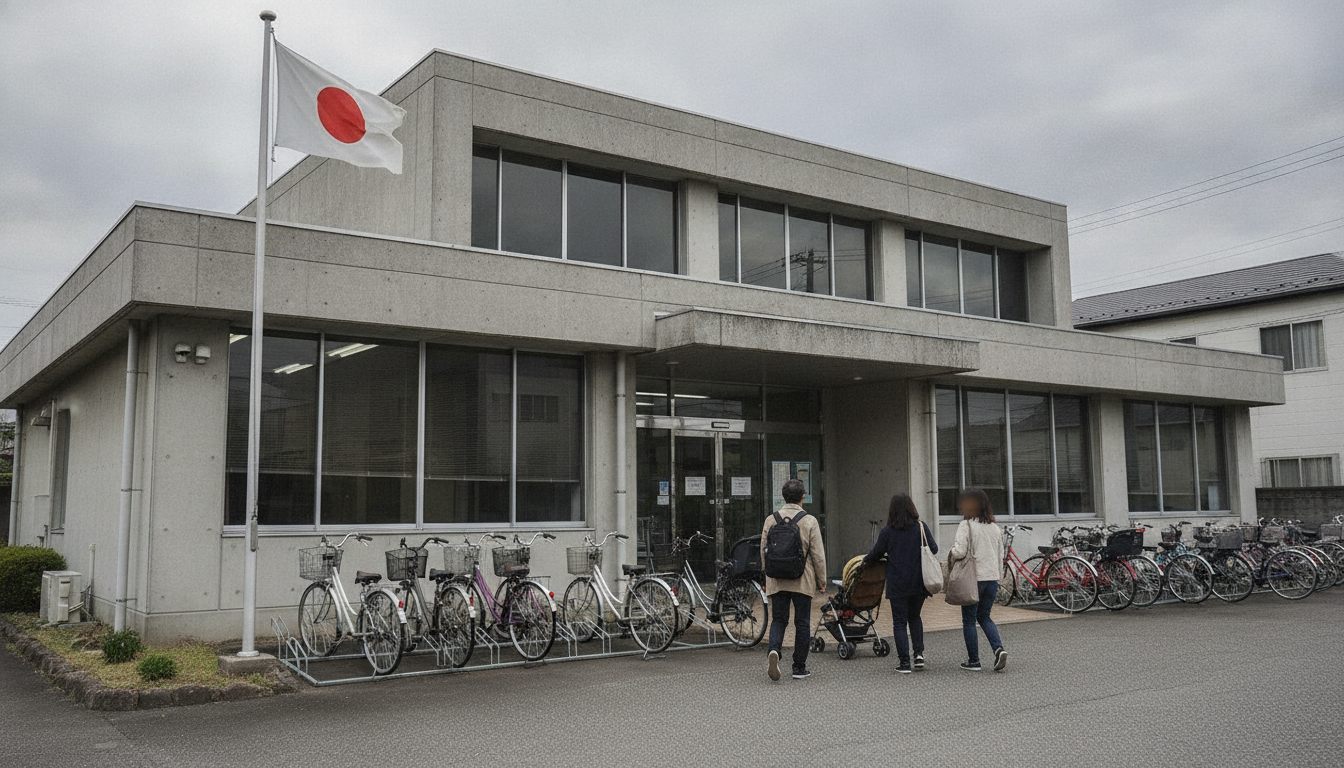
The enrollment window is 14 days from the date you register your new address at the municipal office, whether that's a ward office in central Tokyo or a town hall in rural Nagano. Miss it and nothing gets easier. Coverage starts from the date you became eligible, not the date you filed, so a late application just means you owe the back premiums anyway, with no coverage to show for the gap. There's no grace period for "I didn't know."
What It Actually Costs
NHI premiums have two parts. One is a flat per-person charge set by your municipality, and the other is based on income, specifically your income from the previous calendar year. That second part is where new arrivals get a temporary break. If you had no income in Japan last year, that portion of your bill is zero. The flat portion still applies, but it's automatically reduced, often by as much as 70 percent, for a household reporting little or no prior-year income. "Nearly nothing" is the honest description for a first-year premium. "Nothing" isn't.
Once income is on the books, the income-linked portion alone typically runs somewhere around 10 to 15 percent of your taxable income after deductions, combining separate medical, elderly-support, and long-term-care components, and the exact rate depends on which municipality you've settled in. Osaka's medical-portion rate runs close to 9.5 percent; Tokyo's 23 wards, which share one unified rate, sit closer to 7.5 percent. There's no single national rate to quote, which is exactly why so many English-language guides quote the wrong one.
For treatment itself, NHI covers 70 percent of the cost for most working-age adults, leaving you the remaining 30 percent at the counter. Children under elementary-school age pay 20 percent. People 70 to 74 generally pay 20 percent too, rising to 30 percent only above a defined income threshold. At 75, you're moved automatically out of NHI entirely and into a separate scheme, the Late-Stage Elderly Medical Care System, with its own premium and its own 10, 20, or 30 percent copay bands depending on income. If a guide tells you NHI itself has a bracket for the over-75s, it's describing the wrong program.
There's a backstop for anyone with a serious medical bill. The High-Cost Medical Expense System caps your monthly out-of-pocket total according to income, after a reform that took effect in August 2026. A household in the middle income bands pays no more than roughly ¥85,800 -- ¥179,100 a month even against a bill running into the millions, and the lowest bracket, residents exempt from local tax, is capped at about ¥36,900. The same reform introduced an annual ceiling on top of the monthly one, the first time Japan's system has capped a full year's exposure rather than just a single month's.
The Rule That Raises the Stakes
In November 2025, Japan's health ministry and its Immigration Services Agency jointly announced that from June 2027, unpaid National Health Insurance or national pension premiums will, as a rule, block a visa renewal or change of status. The two agencies are building a shared data link so immigration officers can see payment records directly. A separate measure lets municipalities require new residents to prepay their premiums in a lump sum at move-in registration, starting in April 2026.
The government's own numbers explain why. In the fiscal year ending March 2025, foreign residents paid only about 63 percent of the NHI premiums they owed and roughly half of what they owed into the pension system, against a 93 percent collection rate across all enrollees. The new rule exists to close that gap, and a foreign property owner who establishes residency and then skips the premiums is exactly the person it's aimed at. Nothing published so far describes a hardship exception or a payment plan that avoids the consequence. Treat the premium as a fixed cost from day one, not a bill to negotiate with later.
What's Covered, and What Isn't
NHI pays for the basics without hesitation. It covers GP visits, specialist care, surgery, hospital stays, cavity fillings, extractions, root canals, and standard dentures. It does not cover cosmetic work on the same teeth, implants outside a narrow set of medical exceptions, braces for adults, teeth whitening, or private-grade crowns. Dental coverage in Japan is generous for function and essentially absent for appearance.
Vision works the same way, in miniature. Ordinary glasses and contact lenses for short-sightedness are entirely out of pocket, with one narrow carve-out for children under nine being treated for specific eye conditions. Not every medication sold in Japan is on the national formulary that NHI reimburses, either, so a prescription you relied on overseas may need a Japanese doctor to find an approved equivalent. "Covered" does not mean covered for everything, and the gaps sit mostly in cosmetics and eyewear, not in actual treatment.
If You End Up Employed in Japan Instead
Not every buyer who relocates stays outside the Japanese job market. If you take local employment, your employer almost certainly enrolls you in Shakai Hoken rather than NHI, through one of the regional health insurance associations, Kyokai Kenpo being the largest. The headline rate for fiscal 2026 averages 9.9 percent of salary nationally, split evenly between you and your employer, so your own deduction is close to 5 percent, varying slightly by prefecture. That figure covers health insurance alone. Add Kosei Nenkin, the employee pension scheme, at a combined 18.3 percent also split in half, and the two together take a noticeably bigger bite than the health insurance number alone suggests. Shakai Hoken generally covers the same 70/30 treatment split as NHI, so switching between the two schemes, which many residents do over the years as their employment changes, doesn't reset the clinical coverage, just who collects the premium.
Getting It Right From Day One
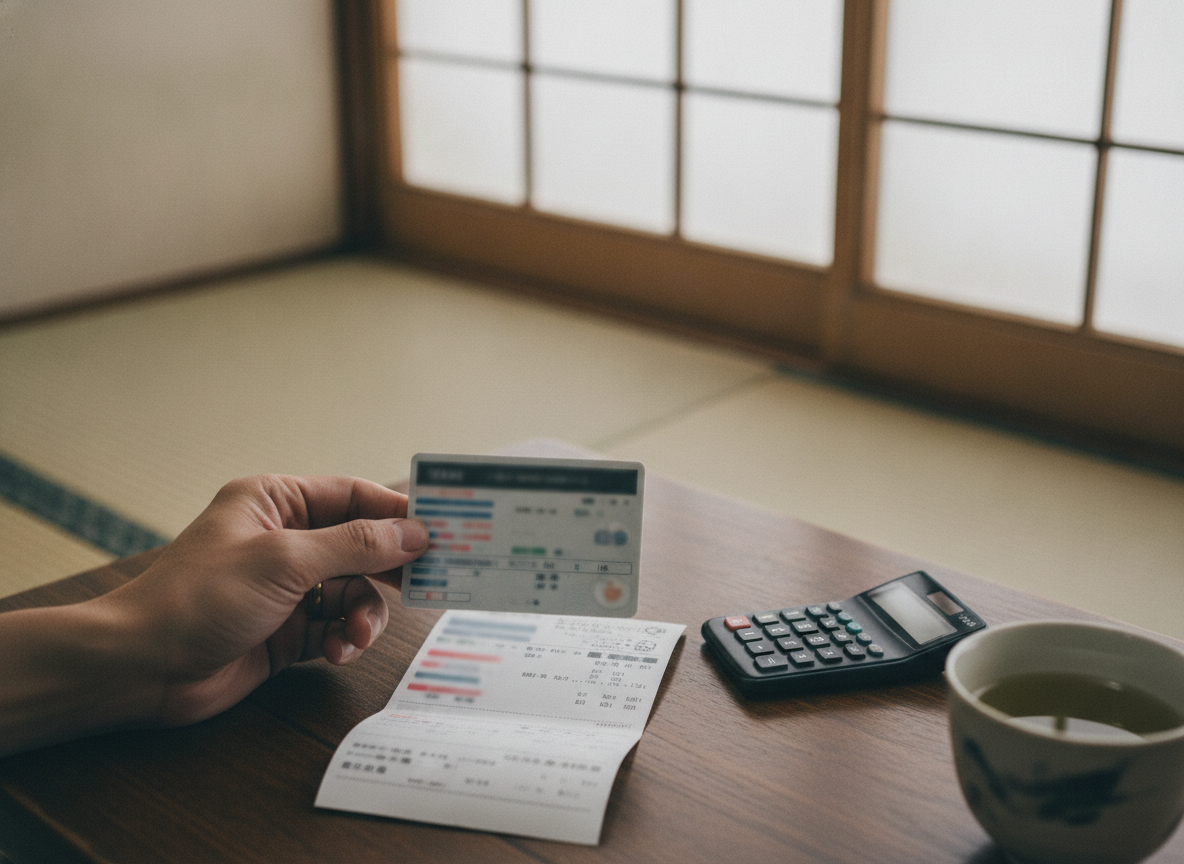
The practical sequence doesn't have many steps. Register your new address at the municipal office within the standard window after you move in, enroll in NHI in the same visit if you have no employer coverage, and keep the receipts. Bring your residence card. You'll be issued an NHI insurance card, and increasingly a My Number Card can serve the same function at the clinic counter, though the rollout still varies by municipality, so ask your own ward office directly rather than assuming.
The Ministry of Health, Labour and Welfare publishes its own English-language overview of the whole system, along with a multilingual phone line for residents who get stuck navigating a ward office in Japanese. Check that page before trusting a blog's summary; the 2027 visa rule alone has been reported with the wrong announcement date often enough to matter. If you're moving to Japan later in life, our guide to senior care and NHI for older buyers goes much deeper into what happens after 70. If the language barrier at the clinic itself is your bigger worry, this piece on finding English-speaking care covers that side of it. And if you haven't settled the visa question yet, start with the visa before the house.
None of this changes whether you can buy the property. It changes what owning it and living in it actually costs once you're the one signed up at the ward office instead of a tourist passing through.
Источники
- Ministry of Health, Labour and Welfare, National Health Insurance system overview (English PDF)
- Ministry of Health, Labour and Welfare, multilingual inquiry and call centre directory
- Ministry of Health, Labour and Welfare, policy announcement on NHI/pension premium payment and visa renewal, November 2025
- Japan Pension Service, health insurance and pension enrollment guide (English PDF)
- Japan Health Insurance Association (Kyokai Kenpo), fiscal 2026 premium rate schedule