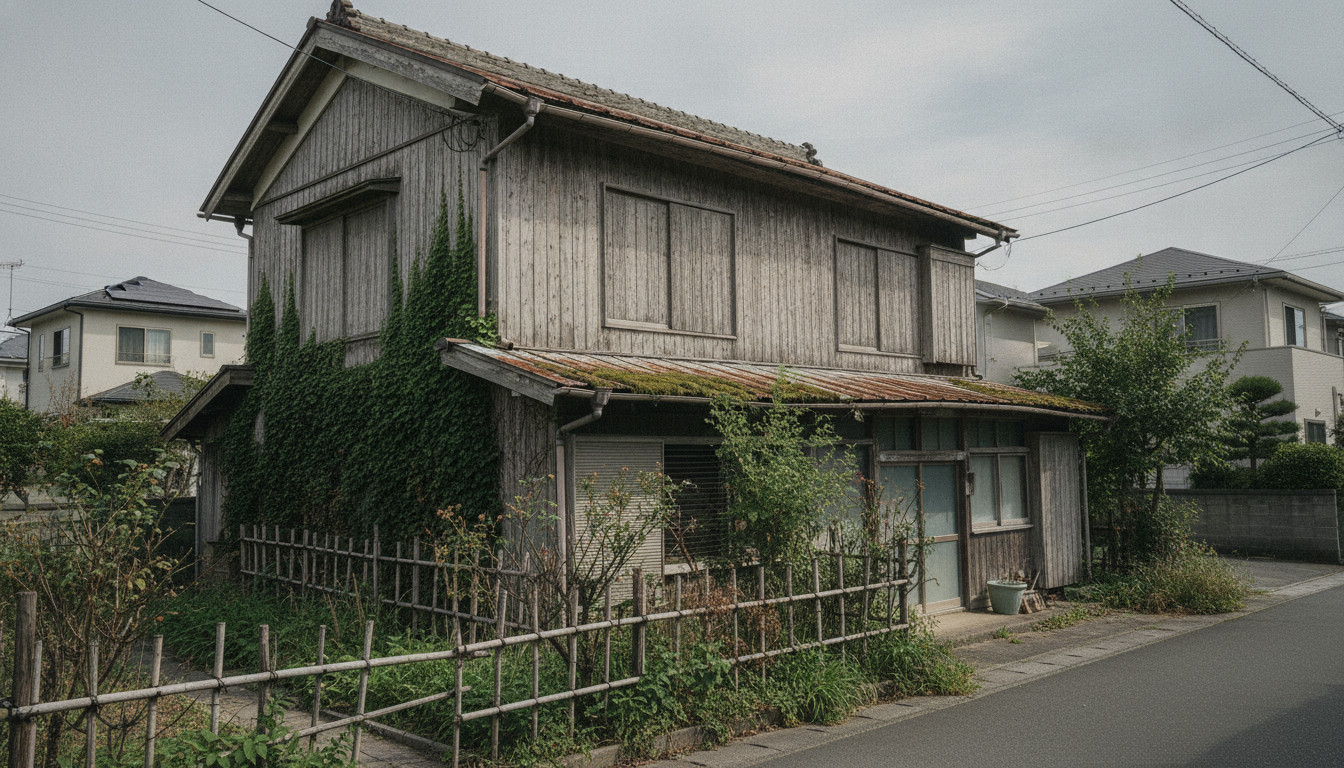
A renter in Manchester or London signs a tenancy, pays it for two years, hands over somewhere between £33,000 and £55,000, and at the end owns nothing they can keep. Renting works like that everywhere. What has changed in Britain is the size of the number: the rent now runs high enough to buy something permanent, outright, on the other side of the world. Two years of a British rent bill is roughly the price of a freehold house in Japan. Not a deposit on one. The whole property, land and building, held outright in your name.
This isn't a rural-only story, and it isn't a fantasy about one-yen houses. Japan's market has town homes near rail, coastal properties, ski-town stock and city flats, at prices that still read as small against a British rent bill. Here is the maths, both sides of it.
Where British housing actually is
Start with the number that shapes everything else: the gap between what a home costs and what people earn. In 2025 the median home in England cost £300,000, which was 7.6 times the median full-time salary of £39,300, according to the Office for National Statistics. In London the ratio was 10.6. In Kensington and Chelsea it hit 25.2. A generation ago the figure sat around four times earnings, the level a bank would actually lend against. The rule of thumb that used to get you a house now gets you a third of one.
The average UK house price was £272,611 in July 2026, per the Land Registry and ONS House Price Index. Against that wall sits the deposit. The average first-time buyer put down about £61,090 in 2024, and Nationwide reckons even a 10% deposit on a typical starter home runs to roughly £23,000. Saving that while also paying rent is the hard part. Half of would-be first-time buyers tell surveys they expect it to take ten years or more. It shows in the numbers: the average first-time buyer in England is now 33 years and 11 months old, up more than three years since 2007. That is what people mean by "Generation Rent": buyers in their twenties and thirties who save steadily and still watch the deposit move away faster than they can reach it.
And the renting itself keeps getting dearer. The average private rent in the UK reached £1,383 a month in May 2026, up 3.3% over the year, according to the ONS. In London it was £2,294 a month. Call it £16,600 a year for the country as a whole, closer to £27,000 in the capital. That is money spent on shelter, which is what rent is for, with nothing left as an asset at the end.
Turn the rent into years
It helps to read rent not as a monthly figure but as a running total: the lump sum you will have paid out by the end of a lease.
- £1,383 a month is about £16,600 a year.
- Two years of that is roughly £33,200.
- Two years of London rent is closer to £55,000.
- Five years at the national average, allowing for the yearly increases, is north of £88,000.
Each of those totals is money spent on shelter with no asset at the end. The same sum, pointed at Japan, meets a market where a great deal of residential stock sells freehold, land and building held outright, for the equivalent of one to two years of a British lease.
The question stops being "can I afford to buy?" and becomes "what am I already spending, and what would that same money own somewhere else?"

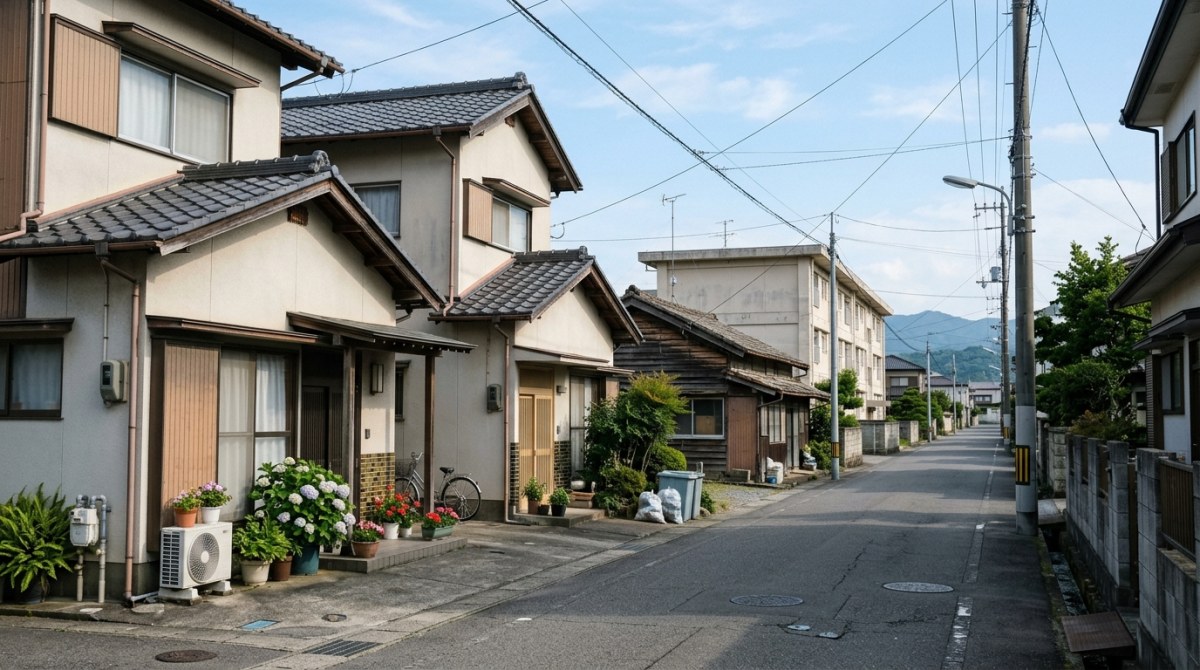
A narrow residential lane in a Japanese city, timber houses beside a low apartment block. This is what freehold usually looks like in Japan, a normal home rather than a ruin. Photo: Leongsan Tung / Pexels
What that money actually buys in Japan
Japan's low prices come from a real oversupply. The country has millions of empty homes, 空き家 (akiya), left behind by an ageing and shrinking population. That is not a rural curiosity. It shows up across price bands and property types. This is the realistic spread as of 2026.
Fixer-uppers and project houses
At the bottom, structurally sound but dated houses list from a few hundred thousand yen, some under ¥1,000,000. These are cheap for reasons covered below, and the sticker is rarely the real cost. But if you want a project and can manage a renovation, this is where the eye-catching numbers live. Prefectures like Wakayama and much of rural Kagawa on Shikoku carry plenty of this stock.
Habitable regional homes
The band most buyers actually want sits around ¥1,000,000 to ¥3,000,000: a house you can live in now, roof and structure intact, maybe needing a kitchen or bathroom update rather than a gut job. Onsen (hot-spring) towns like Beppu in Oita, and coastal towns such as Isumi in Chiba, close enough to Tokyo for a fast train, routinely have homes in this range. Two years of London rent covers the whole purchase with money left for furniture.

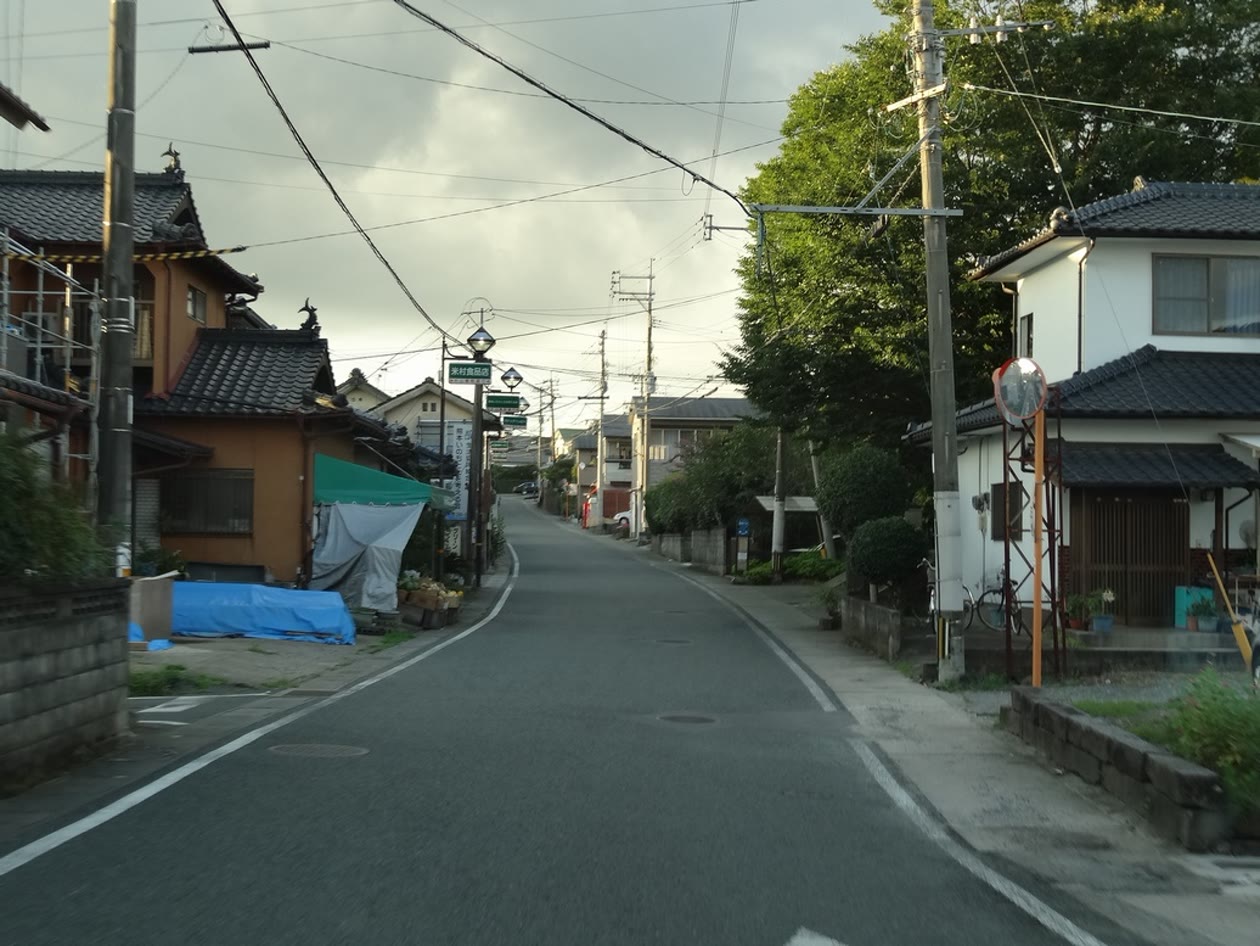
A regional Japanese residential street under the hills, the kind of place where the cheapest habitable stock sits. A house you can live in now costs well inside a two-year UK rent bill. Photo: Glen Zi / Pexels
Renovated, town and near-rail homes
Move up to ¥3,000,000 to ¥8,000,000 and you are into already-renovated houses, larger family homes, and properties within walking distance of a station. This is the band where you skip the renovation risk entirely and buy something move-in ready. For a lot of British renters it is still less than a single lease term plus its renewal.
Urban, coastal and ski stock
The reframe doesn't stop at cheap regions. City flats in Tokyo cost more, of course, but small older units in the wider metro still trade well below what an equivalent British city would ask. Ski-town property around Hakuba in Nagano and Niseko in Hokkaido has climbed as foreign buyers moved in, so the resort cores are no bargain. Drive fifteen minutes out and the price falls off sharply. The point isn't that everything in Japan is cheap. It is that across the whole map, from a village house to a regional flat, your British rent bill stretches further as an owner than it does as a tenant.
Prices above are in yen, and the figure in your own currency shown beside each one updates from live exchange rates. Change the display with the globe control at the top of the page rather than trusting any conversion written into the text, because rates move week to week. At the moment the pound buys a lot of yen by recent standards, which quietly widens the gap in your favour.

Modern detached houses on a Japanese residential street. Freehold homes sell across every price band here, from village houses to move-in-ready town homes. Photo: Halil Fatih Cetin / Pexels
Yes, a Briton can buy, freehold, with no visa
Here is the part most people don't believe until they read it twice. There are no nationality or residency restrictions on buying property in Japan. A British citizen, sitting in Britain, having never set foot in the country, can buy a house or flat outright and own the land under it in freehold. No visa, no residence permit, no local partner or company required for the purchase itself. Japan is one of the most open property markets in Asia for foreign buyers.
The catch, and it matters, is the mirror image: owning a house grants you nothing on the immigration side. Japan has no "golden visa" tied to property, and home ownership counts toward no residence status whatsoever. You can own the house and still only be allowed to stay as long as an ordinary tourist visa permits, unless you hold a separate, standard visa (work, business manager, spouse, and so on). For most overseas buyers this is a second home, a long-stay base, a renovation project, or a long-term bet on the yen and the market. Treat the house and the visa as two entirely separate questions, because Japanese law does.
Buying from abroad, and the cash question
You can run most of a purchase remotely. Listings, video viewings, offers and much of the paperwork happen at a distance, and the title registration is handled in Japan by a 司法書士 (shihō shoshi, judicial scrivener), who can act on a signed power of attorney so you don't have to be in the room. People do complete purchases without a viewing trip, though a visit before you commit is the sensible move.
The real constraint for a non-resident is finance. Japanese banks generally lend only to people with residency, a local income, or permanent residence, so a British buyer with no Japanese footing usually cannot get a standard Japanese mortgage. In practice most overseas buyers pay cash, or raise the money at home. Given that a habitable regional house can cost less than a UK deposit, cash is a lower bar here than it sounds, which is the whole point of the comparison.
This is where a licensed local partner earns their fee. The purchase contract, the title registration, and the due diligence on an older building all move faster with someone who does this daily and works in English. Our licensed partner brokerage Akiya Japan Buyer Support specialises in foreign-buyer transactions and can walk you through the legal steps before you commit. You can book a consultation if you want the process mapped out first.
The counterweight
None of this works as a same-month escape from a British tenancy, and anyone selling it that way is selling you something. The honest caveats:
The cheap houses are cheap for reasons. A ¥1,000,000 house usually carries some mix of distance from the nearest station and shops, older construction that predates the 1981 earthquake code, and a renovation bill that can run several times the purchase price. A solid renovation, meaning rewiring, plumbing, roof and floors, commonly costs ¥3,000,000 to ¥8,000,000. Budget for the house and the work together, not the sticker alone. Managing that work from Britain adds its own friction, and a project house is not a good first move for someone who can't visit.
Holding costs are low but not zero. The annual fixed-asset tax on a modest rural house is often under ¥100,000, and there may be small neighbourhood-association fees. Transaction costs at purchase, meaning agent commission, registration tax and the judicial scrivener, typically add ¥300,000 to ¥700,000 on top of the price. Real costs, but a long way from a monthly rent cheque that never stops and never buys you anything.
Where to start
You don't need to choose between a village akiya and a Tokyo flat today. You need to see, for your own budget, what turns a year or two of rent into something you own. The comparison isn't "can I afford a house in Japan." It is "I'm already spending £16,600 a year on rent, so what does one or two years of that own outright?"
Set a budget that matches a year or two of your current tenancy, pick a region by how you'd actually use the place, whether that is a weekend base, a ski season, a coastal retreat or a full renovation project, and browse the listings filtered to it. Rents look set to keep climbing either way, so it is worth knowing what the same money would buy if you owned instead.
Sources
- ONS, Housing affordability in England and Wales 2025: median England home £300,000, 7.6x earnings, London 10.6x
- HM Land Registry / ONS UK House Price Index: average UK house price £272,611, July 2026
- ONS, Private rent and house prices UK: average rent £1,383/month, London £2,294/month, 2026
- Nationwide Housing Affordability Report 2026: first-time buyer deposit and loan-to-value data
- GOV.UK: average age of first-time buyers in England now 33.9 years
- GBP/JPY exchange rate, mid-September 2026 (~208 yen to the pound)
- Statistics Bureau of Japan, Housing and Land Survey (national vacant-home stock)