You did what you were told. You finished school, you took the job, you kept the credit clean, and somewhere along the way you started saving for the down payment. Then the number you were saving toward kept walking away from you. The median existing home in the United States sold for about $434,100 in July 2026, and to carry it at a normal rate you need to earn roughly $110,000 a year. The typical American household earns about $87,600. That gap, around $22,000 a year, is the sound of the door closing.
This piece is about what happens when you stop measuring that door and turn around. Japan will sell you a house. A real one, land and building, held freehold in your name, for the price of a year or two of what you are already paying to rent in America. No residency required, no visa needed, no citizenship test. Here is the honest maths, both the pain at home and the exit, with the catch spelled out so you can see it before you decide anything.
What the American market actually costs you now
Start with the numbers, because the feeling everyone has right now is built on top of them. The National Association of Realtors put the median existing-home price at $434,100 in July 2026, after a June reading of $440,600. Redfin's affordability tracker says you need to earn close to $110,000 a year to comfortably buy the typical home, meaning no more than about 30% of your income going to the payment. The median household income is roughly $87,600. So the median household cannot comfortably buy the median home. That is not a personal budgeting failure. It is the arithmetic of the whole market.
The monthly payment tells the same story. By early September 2026 the typical US homebuyer's payment had reached about $2,641 a month, the highest in 14 months on Redfin's tracking. Multiply that across thirty years and you are looking at a commitment that most people under 40 simply cannot start, because they cannot assemble the down payment while paying today's rent.
Zoom out and the ratio makes it plain. The median home now costs about five times median household income, according to Harvard's Joint Center for Housing Studies, against a long-run norm nearer 3.2 through the 1990s. A home used to cost about three years of a household's income. Now it costs five. Nothing about the house changed. The distance to it did.
You can see the result in who actually owns. The homeownership rate for adults under 35 sits around 35%. First-time buyers made up just 21% of all purchases in the latest NAR survey, the lowest share since the association started counting in 1981, and the median first-time buyer is now 40 years old. A generation is buying its first home in middle age, if it buys at all. The rest keep renting, and renting is not standing still either: Zillow's rent index hit about $1,962 a month in July 2026, up 2.3% over the year and climbing.
The sharpest version of this is the one people have started filming. There is a corner of YouTube now given over to people with steady jobs who live in their cars. They park overnight in a Walmart lot and keep a gym membership mostly for the shower. Most of them do not call it homelessness, and from the inside it reads more like a workaround than a crisis. But it is the same arithmetic as the rest of this section, pushed to the point where a wage covers a car and a phone and no longer covers a room.
Turn the rent into years
Stop thinking of rent as a monthly number and start thinking of it as a lump sum you hand over and never see again. At about $2,000 a month, here is what leaves your account and returns to you as nothing:
- One year of rent is roughly $24,000.
- Two years is about $48,000.
- Five years, allowing for the annual increases, runs comfortably past $130,000.
Every one of those figures is money spent on somewhere to sleep, gone. Each link above points the same sum at Japan, where a large share of residential stock sells freehold for the equivalent of one to two years of an American lease. Not a deposit. The whole property.
The question stops being "can I afford to buy a house?" and becomes "what am I already spending, and what would that same money own somewhere else?"
What that money actually buys in Japan
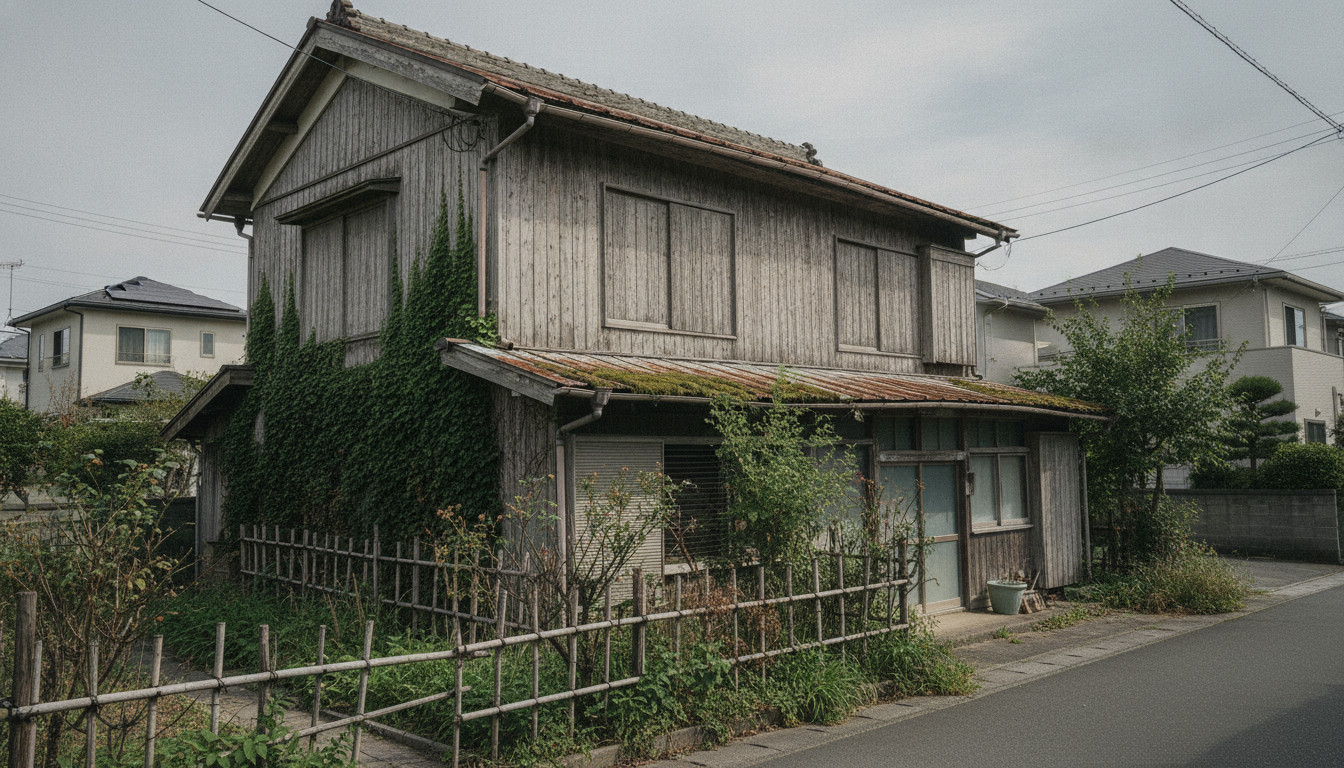
Japan's low prices come from a housing glut. The country has millions of empty homes, 空き家 (akiya), left behind by an ageing and shrinking population. That surplus shows up across price bands and property types, and not only in far-off villages. This is the realistic spread as of 2026.

Residential rooftops in Tokyo's Sumida Ward. The empty-home surplus runs through suburbs and cities, not only the countryside. Photo: Asahi Yoshida / Pexels
Project houses
At the bottom, structurally sound but dated houses list from a few hundred thousand yen, some under ¥1,000,000. These are cheap for reasons covered below, and the sticker price is rarely the real cost. But if you want a project and can manage a renovation, this is where the eye-catching numbers live. Prefectures like Wakayama and much of rural Kagawa on Shikoku carry plenty of this stock.
Habitable homes you can use now
The band most buyers actually want sits around ¥1,000,000 to ¥3,000,000: a house you can live in as it stands, roof and structure intact, maybe wanting a kitchen or bathroom update rather than a gut renovation. Onsen (hot-spring) towns like Beppu in Oita, and coastal towns such as Isumi in Chiba, close enough to Tokyo for a fast train, routinely have homes in this range. One or two years of American rent covers the whole purchase.

A timber house in Nikko, Tochigi. Move-in-ready homes in this style sell for a fraction of an American down payment. Photo: Eva Bronzini / Pexels
Renovated, town and near-rail
Move up to ¥3,000,000 to ¥8,000,000 and you are into already-renovated houses, larger family homes, and properties within walking distance of a station. This is the band where you skip the renovation risk and buy something move-in ready. For a lot of American renters, it is still less than what they will pay across a single lease and its renewal.
Urban, coastal and ski stock
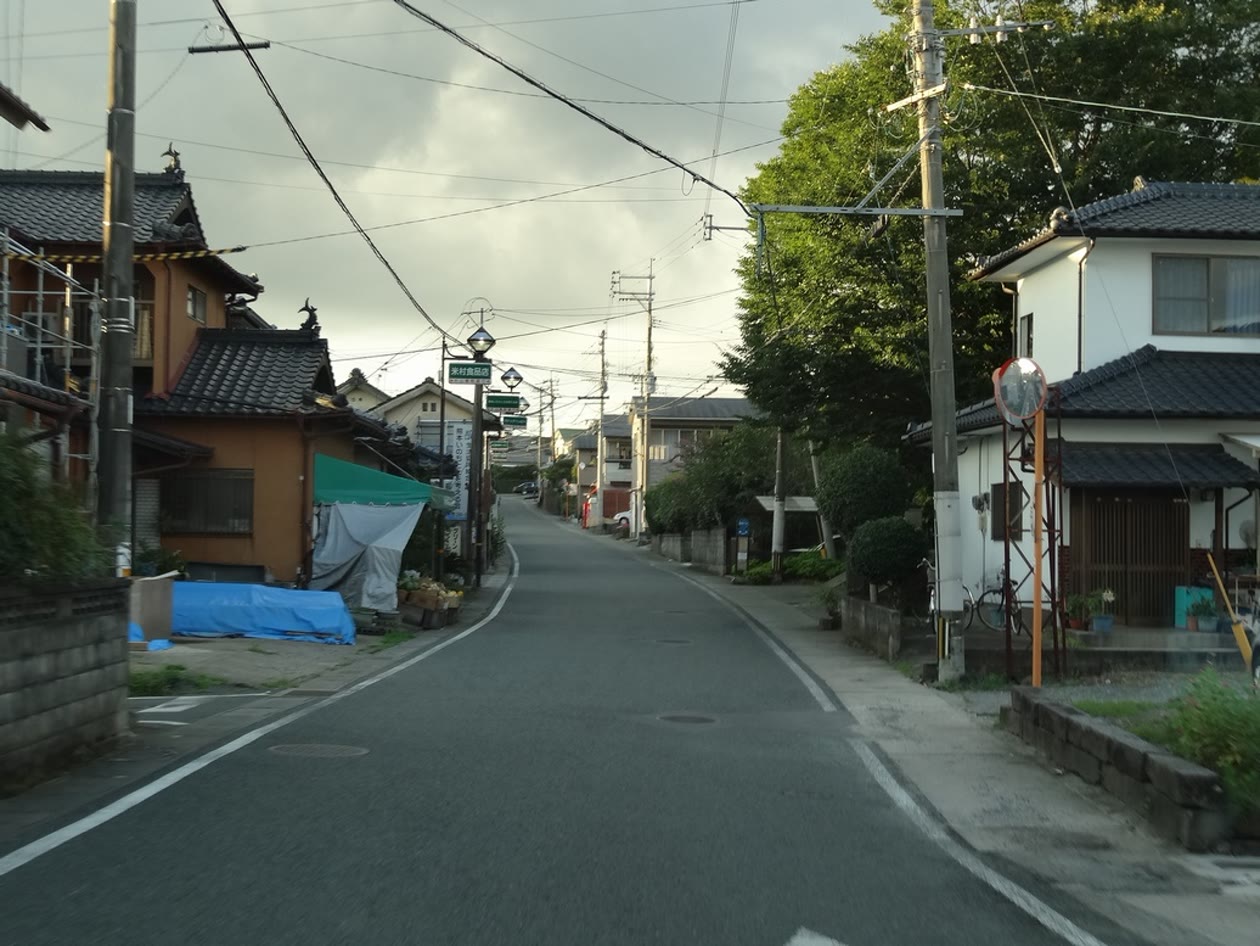
The reframe does not stop at cheap regions. Older apartments in Tokyo and Osaka cost more, but small units in the wider metro still trade well below what an equivalent American city would ask. Ski-town property around Hakuba in Nagano and Niseko in Hokkaido has climbed as foreign buyers moved in, so the resort cores are no bargain, but drive fifteen minutes out and the price falls off sharply. The point is not that everything in Japan is cheap. It is that across the whole map, your American rent bill stretches further as an owner than it does as a tenant.

Traditional houses in a regional Japanese town. Away from the resort cores, prices drop fast. Photo: Lorenzo Castellino / Pexels
Prices above are in yen, and the figure in your own currency shown beside each one updates from live exchange rates, so treat those conversions as indicative and change the display with the globe control at the top of the page rather than trusting any number written into the text. Rates move week to week.
Yes, an American can actually own it
This is the part people assume must be blocked, and it is not. Japan places no nationality or residency restriction on buying real estate. A US citizen can buy a freehold house in Japan on a tourist stamp, or without ever having set foot in the country, and hold it outright with the same ownership rights as a Japanese national. There is no foreign-buyer surcharge and no special approval to clear. We have laid out the full picture in yes, foreigners can buy property in Japan.
One line matters more than any other here, so read it twice: owning a house in Japan gives you no visa and no residency. Japan has no "golden visa" tied to property, and the Immigration Services Agency does not count home ownership toward any residence status. You can own the house and still only be allowed to stay as long as your ordinary visa permits. For most overseas buyers this is a second home, a long-stay base, a renovation project, or a long-term bet on the yen and the market, not a move-abroad-tomorrow plan. Treat the house and the visa as two entirely separate questions, which we walk through in owning a home is not a visa.
Buying from your kitchen table in America
You can run the whole purchase from abroad. Listings are viewed online, video walkthroughs stand in for the first visit, and the paperwork can be handled by proxy. The title transfer itself is registered by a 司法書士 (shihō shoshi, judicial scrivener), a licensed specialist whose job is to make sure the property is really the seller's to sell and that the registry ends up in your name. Most overseas buyers give a local representative power of attorney for the signing day so they do not have to fly in twice.
The cash-versus-mortgage reality
Be clear-eyed about financing. Japanese banks rarely lend to a non-resident foreigner with no income in Japan, so for most overseas buyers these purchases are cash. That is workable precisely because the prices are small: a house that costs one to two years of your rent is a sum many buyers can raise without a mortgage at all. If you do want to borrow, it usually means residency and a Japanese income first, or financing raised back home against another asset. We cover the lending picture in can a foreigner get a Japanese mortgage?
The weak yen is doing half the work
Timing helps you right now. The yen has traded near 157 to the US dollar through September 2026, weaker than it has been in decades and down about 6% against the dollar over the past year. Every dollar you bring converts into more yen than it would have a few years ago, which means a Japanese price tag that was already low reads lower still to an American wallet. That tailwind can reverse, so it is a reason to look seriously now rather than a promise for later.
What you will actually pay to own it
Holding costs are low but not zero. The annual fixed-asset tax on a modest house is often under ¥100,000, with maybe a small neighbourhood-association fee on top; the full breakdown is in our property tax guide. Transaction costs at purchase, agent commission, registration tax and the shihō shoshi's fee, typically add ¥300,000 to ¥700,000 on top of the price. Real costs, but a long way from a rent cheque that never stops.
This is where a licensed local partner earns their fee. The contract, the title registration, and the due diligence on an older building all move faster with someone who does this daily and works in English. Our licensed partner brokerage Akiya Japan Buyer Support specialises in foreign-buyer transactions and can map the legal steps before you commit; you can book a consultation if you want the route drawn out first.
The honest catch
None of this is a same-month escape from an American lease, and anyone selling it that way is selling you something. Two facts keep people honest.
First, the cheap houses are cheap for reasons. A ¥1,000,000 house usually carries some mix of distance from the nearest station and shops, older construction that predates current earthquake codes, and a renovation bill that can run several times the purchase price. A solid renovation, rewiring, plumbing, roof and floors, commonly costs ¥3,000,000 to ¥8,000,000, so budget for the house and the work together, not the sticker alone. Managing that work from the United States adds its own friction and its own cost. The American buyer's fuller reckoning is in the American buyer's reality check.
Second, distance is not a detail. A house eleven time zones away is not a place you pop back to on a Saturday to fix a leak. For most American buyers the sane version of this is a second home, a long game, or a project you visit and slowly make yours, not a full relocation you sign for sight-unseen. Go in with that frame and the low price is a gift. Go in expecting a turnkey life change by next month and you will be disappointed.
Where to start
You do not need to choose between a village house and a Tokyo flat today. You need to see, for your own budget, what leaves the rent trap and buys an asset. The comparison is not "can I afford a house in Japan." It is "I am already spending $24,000 a year on rent, so what does one or two years of that own outright?"
Set a budget that matches a year or two of your current lease, pick a region by how you would actually use the place, weekend base, ski season, coastal retreat, renovation project, and browse the listings filtered to it. The American housing market is not going to hand you the keys it has been walking away from you for a decade. Another country will, for the money you are already spending to own nothing.
Sources
- National Association of Realtors: existing-home median price, June and July 2026
- Redfin: income needed to afford the typical US home near $110,000 (2026)
- Redfin: typical US homebuyer monthly payment about $2,641, a 14-month high (September 2026)
- Harvard Joint Center for Housing Studies: home prices near five times median income (2026)
- NAR: first-time buyer share falls to record low; median first-time buyer age 40
- Zillow: typical US asking rent $1,962/month, July 2026
- Trading Economics: USD/JPY near 157, September 2026
- Statistics Bureau of Japan, Housing and Land Survey (national vacant-home stock)